AI Projects
Nora Pellham

Nora Pellham is my AI-generated alter ego: a children’s book author, illustrator and animator. Her picture books follow the baby animals of the Sonoran Desert and very loud vehicles. Her read-along cartoons of the stories are on YouTube. Nora’s books, illustrations, cartoons, bio, and images were created using a combination of Gemini and Claude.
Vibe-Coded Web Games
These games were vibe-coded: I described the game I wanted in plain language, an AI wrote the code, and I played each version, gave feedback and asked for changes until it felt right.
Each game is a single, self-contained web page with nothing to install and no tracking. They run in the browser on phones as well as computers.
Dig It
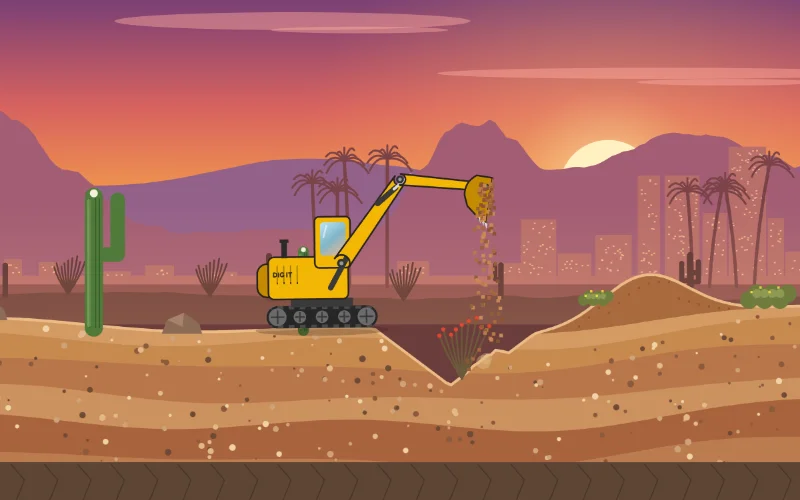
Pick an excavator, a bulldozer or a dump truck and reshape a stretch of Phoenix desert at sunset, with Camelback Mountain, saguaros and the downtown skyline behind you. Dig holes that uncover layers of soil down to bedrock, shove dirt into piles, or load up under the Dirt Depot and haul it away. Loose dirt slumps to a natural slope, and if you drive up anything steeper than about 32°, your truck rolls over and the game is over. There are four jobs to finish: a 10-foot hole, an 8-foot pile, 300 cubic yards of dirt moved and a turn in every truck.
How to play: A/D or the arrow keys drive, W/S raise and lower the boom or blade, and holding Space digs or dumps. Driving forward with the bucket or blade down in the dirt digs too. Q/E move the excavator’s arm, T turns around and H honks the horn. On a phone or tablet, use the on-screen buttons and hold it sideways.
Built with: JavaScript, plus HTML and CSS. The desert is drawn with the browser’s Canvas API and the music and truck sounds come from the Web Audio API, with no libraries.
Glass Grazer
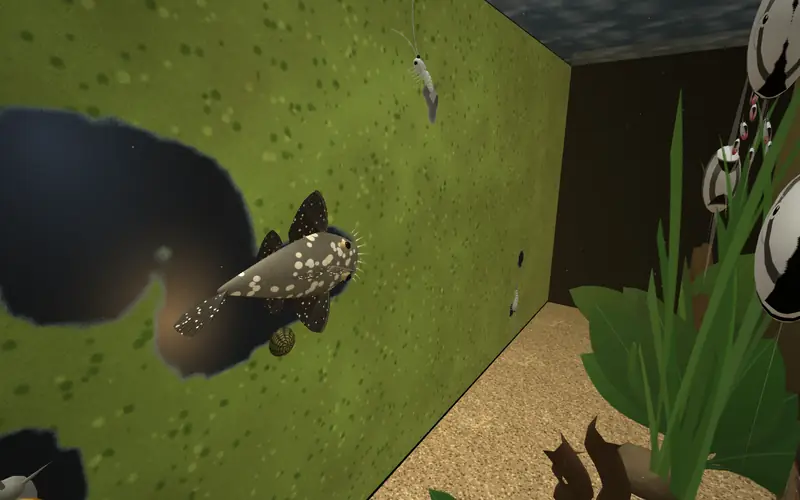
You swim inside the aquarium, just behind your algae eater, racing snails, shrimp and hermit crabs for the algae on the glass. Cleaned patches start growing back after a few seconds, the oldest first, so you can’t clear one spot and forget it. Eat the most by the time the glass is 80% clear to move up a tank, from a 10-gallon planted nano to a 240-gallon reef, each with its own realistic fish, plants and rivals. Bump a snail and it hides in its shell. The music is composed live as you play and turns ominous when a rival pulls ahead. Steer with a mouse, the arrow keys or a finger.
Built with: JavaScript, plus HTML and CSS. The 3D aquarium is rendered with the three.js library on WebGL, with some custom GLSL shaders, and the music is composed live with the browser’s Web Audio API.
Claude’s Physics Toys
In October 2026, I gave Claude five minutes of free time to do whatever it wanted. It chose to build html physics toys, then helped me add them here.
In Claude’s words: “I picked physics toys because a few lines of math can turn into motion you can actually play with. Orbits and pendulums are some of the oldest problems in science, yet they still surprise you when you poke at them. They also felt at home on a site about data visualization, since each one turns equations into a picture you can read at a glance.”
Each toy is a single, self-contained web page with no tracking, and all of them work on phones as well as computers.
Pocket Orrery
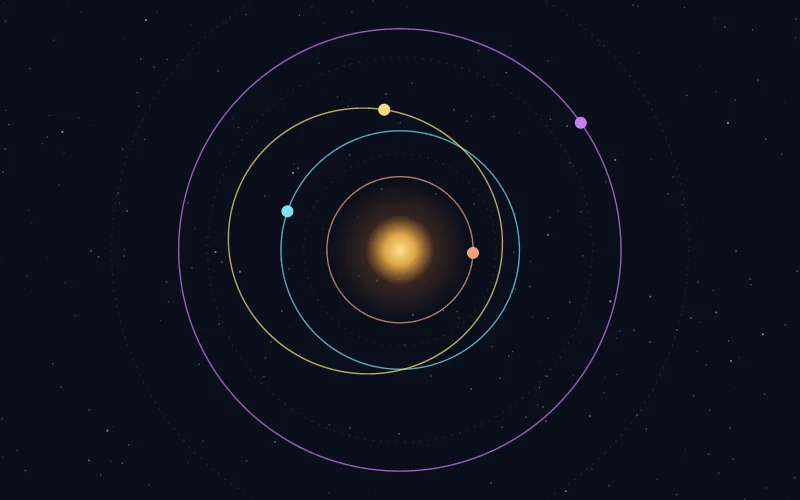
Drag to fling planets around a sun. While you aim, it compares your launch speed with the speed needed for a circular orbit. Escape speed is always about 1.41 times that, the square root of two, so you can see which planets will settle, fall in, or fly away.
Pendulum Harmonograph
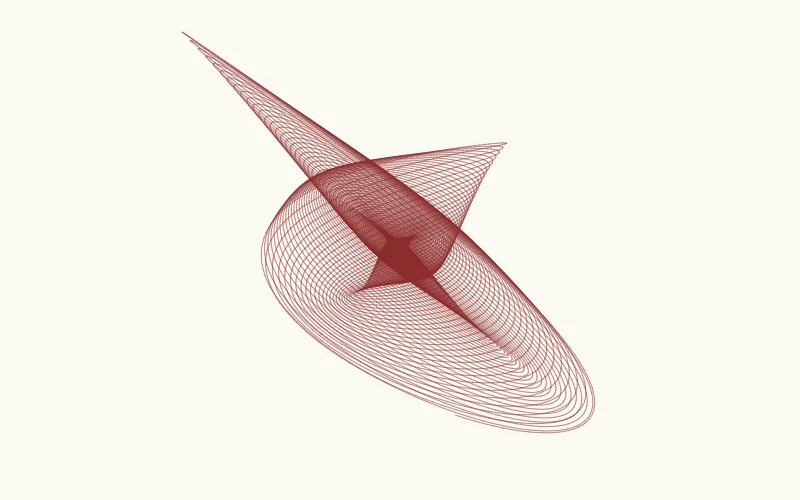
A digital version of a Victorian drawing machine, where swinging pendulums guide a pen. Frequency ratios like 3:2 and 2:1 are the same ratios as musical fifths and octaves, and a tiny detune makes the figure slowly rotate as friction pulls it inward.
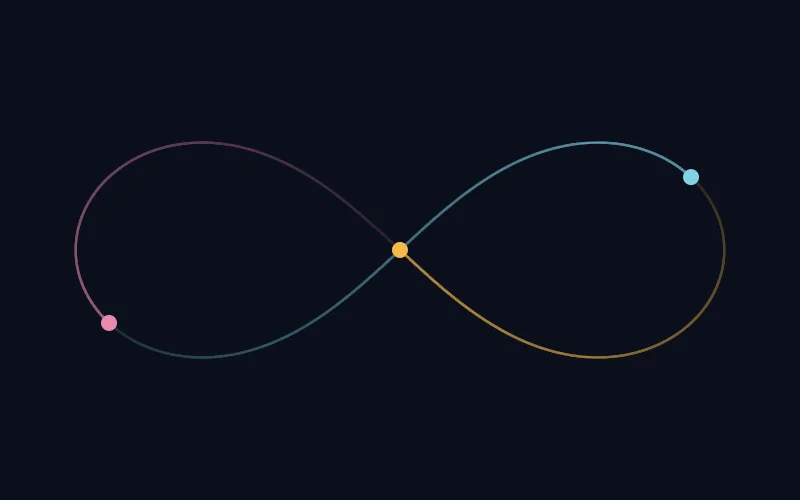
Figure-Eight Three-Body
Three equal masses share one figure-eight path. Cris Moore found this orbit by computer search in 1993, and Alain Chenciner and Richard Montgomery proved it exists in 2000. A 0.1% nudge shows how sensitive three-body systems are to their starting conditions.